Dengue Fever in Pakistan: Prevention, Early Warning Signs, and Effective Protection
Learn how dengue fever spreads in Pakistan, its early and severe warning signs, and proven ways to prevent mosquito-borne infection at home.

Noor Nadeem
Medical Content Writer
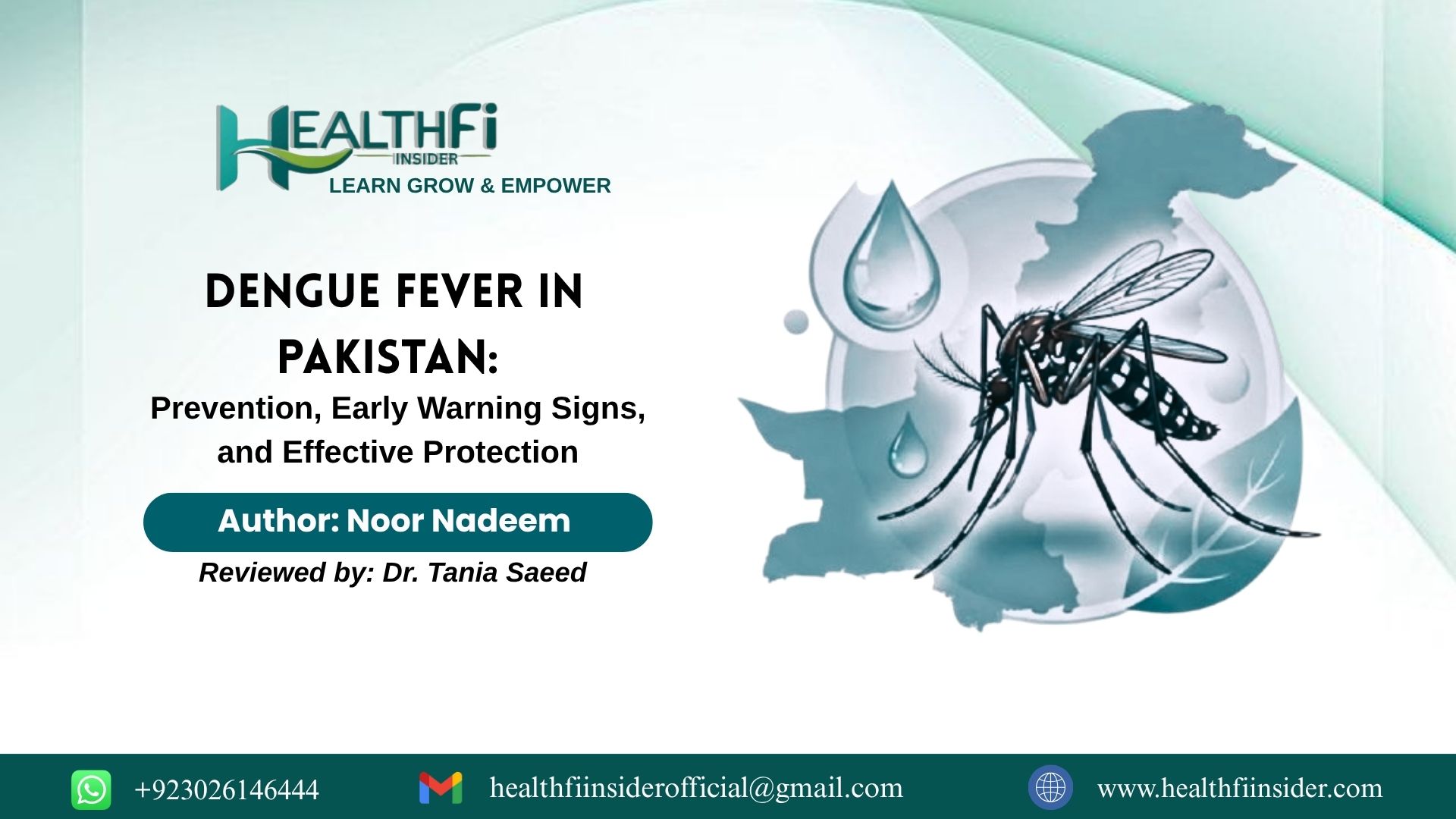
Dengue Fever in Pakistan
Every year, when the monsoon rains come to Pakistan, people worry about dengue fever. Dengue fever is a problem in cities like Lahore, Karachi, and Islamabad. WHO notes that dengue transmission can occur whenever mosquitoes are active, although it often increases during rainy seasons because temperature, humidity, and rainfall favor mosquito populations. Hospitals get very busy. Many families get affected. If you know how dengue fever spreads, what the early warning signs are, and how to prevent it, you can stay safe. This blog explains how dengue spreads, its warning signs, and effective ways to prevent it.
What is dengue fever, and why does Pakistan keep facing it?
It is caused by a virus that is spread by the bite of a female Aedes mosquito. These mosquitoes are most active in the morning and late afternoon. There are four types of dengue virus (DEN-1, DEN-2, DEN-3, and DEN-4). If you get infected with one type, you will not get that type again. You can still get infected with the other types.Pakistan has recorded dengue outbreaks since the first was documented in Karachi in 1994, with the country's largest outbreak occurring in Lahore in 2011, right after severe flooding. That pattern has held since: heavy rainfall followed by stagnant water creates ideal breeding conditions for the mosquito, and outbreaks tend to follow flooding or an unusually wet monsoon. Rapid urbanization, open drains, poor solid waste management, and dense housing all give the mosquito more places to breed close to where people live. The Aedes mosquito is a daytime biter, most active in the early morning and late afternoon, which is different from malaria-carrying mosquitoes that bite mainly at night. It also breeds in small amounts of clean, stagnant water rather than dirty ponds or sewage, which is why a discarded tire, a flowerpot saucer, or an uncovered water tank can be just as much of a risk as a puddle in the street.
Early Warning Signs:
Dengue symptoms usually appear four to ten days after the mosquito bite, and the illness often starts off looking like an ordinary flu. That resemblance is exactly why people delay seeing a doctor and why early recognition matters.Common early symptoms include:
Sudden high-grade fever, often 104°F (40°C) or higher
Severe headache, particularly behind the eyes
Joint and muscle pain (dengue has long been nicknamed "breakbone fever" for this reason)
Nausea, vomiting, or loss of appetite
Skin rash, usually appearing a few days into the fever
Mild bleeding, such as bruising easily or bleeding gums
A dengue fever patient begins to feel better after a week or ten days of illness. However, some individuals, particularly children, the elderly, or those with preexisting medical conditions, can develop severe dengue.
Signs of Severe Dengue:
Severe dengue can lead to plasma leakage, dangerously low platelet counts, internal bleeding, or shock. Anyone with dengue symptoms who develops the following should get to a hospital without delay:
Vomiting that persists for a long time with no apparent cause
Severe abdominal pain or discomfort
Bleeding from the nose, gums, or digestive tract
Labored breathing
Irritability in children, sleepiness, and fatigue in adults
When dengue is suspected, the patient should be tested to determine whether they have the infection or not. If the tests are positive, the doctor will advise what to do next and when to return.
Prevention and Protection:
The most effective way to deal with dengue fever is by eliminating breeding sites for the Aedes mosquito. A dengue vaccine is also available in some settings, but vaccination is not a substitute for mosquito-bite prevention and vector control. Current WHO guidance recommends paracetamol/acetaminophen for fever and pain and advises avoiding aspirin and ibuprofen/other NSAIDs because they can increase bleeding risk. However, each person can significantly reduce their risk of infection and protect their family by following a few simple practices.For instance, the Aedes mosquito lays eggs in stagnant water, which means that eliminating such sources from your home and surroundings is critical.Effective measures against dengue fever are
Destroying or eliminating sources of stagnant water.
Use mosquito repellents in your homes and on your body when outdoors, especially in the morning and the evening.
Wear long-sleeved clothing and long pants when outdoors.
Install mosquito nets in homes, especially for children.
When possible, use mosquito coils, plug holes in windows, or other means of preventing mosquitoes from entering.
Community participation helps in fighting a disease that affects the entire population. Local authorities in dengue-infected areas organize extensive anti-dengue campaigns and take steps to reduce the number of mosquitoes during the rainy season. Spraying insecticides also helps, but it has little effect on the larvae already present in stagnant water. Individuals can participate in community efforts by reporting stagnant water and working with local authorities to find and eliminate breeding sites for the Aedes mosquito. Furthermore, it is necessary to educate the people and spread useful information rather than rumors
When to consult a doctor?
If you develop a fever and have symptoms that could indicate dengue, especially after staying in or traveling to an area where dengue is common, consult a healthcare professional for proper evaluation and testing. Early medical assessment can help identify dengue and determine the appropriate care. Seek medical attention immediately if symptoms become severe or if warning signs such as persistent vomiting, severe abdominal pain, bleeding from the nose or gums, difficulty breathing, extreme weakness, restlessness, or unusual sleepiness develop. These symptoms may indicate severe dengue and require urgent medical care.Do not self-medicate with aspirin or ibuprofen because these medicines can increase the risk of bleeding. Paracetamol may be used for fever and pain as advised by a healthcare professional.
Frequently Asked Questions
Can people get dengue fever from each other?
Dengue fever is not contagious, so it cannot be transmitted from person to person. It is contracted by one person from the bite of an Aedes mosquito that has previously bitten an infected person.
Can a person get dengue fever more than once?
A person can get sick with dengue fever more than once in their lifetime because there are four types of the dengue virus (DENV 1-4). A person who has had dengue fever is immune to only one type of the dengue virus. A subsequent dengue infection with a different serotype can increase the risk of severe dengue.
Do air conditioning and cleanliness prevent dengue fever?
Air conditioning and personal hygiene are essential but insufficient. Measures to prevent dengue fever. The Aedes mosquito can live and bite inside the house. To prevent dengue fever, it is necessary to pay attention. To the potential sources of water where the mosquitoes can live. Therefore, in the house, it is essential to check the cooler, the water stored there, the pots, the water on the balcony, and the plants.
Are children at risk of dengue fever?
Children are more likely to develop severe dengue fever and cannot adequately. Describe their symptoms. It is necessary to monitor children’s temperature and behavior closely and consult a doctor immediately if anything suspicious is noticed.
References:
Centers for Disease Control and Prevention. (2026). Areas with risk of dengue. U.S. Department of Health and Human Services
National Institute of Health, Pakistan. (2023). Advisory for the prevention and control of dengue fever.
Shaikh, O. A., Rahim, M., Essarani, M., Nadeem, S., Ochani, S., Hasibuzzaman, M. A., & Ullah, K. (2022). Dreadful infectious disease outbreaks threaten flood-ravaged Pakistan: Short communication. Medical Journal of the Islamic Republic of Iran, 36. https://pubmed.ncbi.nlm.nih.gov/36424668/
World Health Organization, Regional Office for the Eastern Mediterranean. (2021). Upsurge of dengue cases in Pakistan, 2021: Weekly epidemiological monitor (Vol. 14, Issue 46).
World Health Organization. (2021). Disease outbreak news: Dengue fever—Pakistan. https://www.who.int/emergencies/disease-outbreak-news/item/dengue-fever-pakisan


Suggested Reading

AntiMicrobial Resistance In Pakistan: Why It Matters and How We Can Stop the Silent Pandemic
Explore why antimicrobial resistance is rising in Pakistan, its human and economic toll,and what

World Pharmacists Day 2026: Strengthening Pharmacists to Make Healthier Futures
World Pharmacists Day 2026 explores FIP's theme of empowering pharmacists, with a firsthand look at their expanding clinical role in Pakistan.