World Pharmacists Day 2026: Strengthening Pharmacists to Make Healthier Futures
World Pharmacists Day 2026 explores FIP's theme of empowering pharmacists, with a firsthand look at their expanding clinical role in Pakistan.

Dr. Ali Danish Alvi
Medical Content Writer
World Pharmacists Day 2026: Strengthening Pharmacists to Make Healthier Futures
On 25th September, World Pharmacists Day is celebrated worldwide every year, bringing the world's pharmacy community together to commemorate the founding of the International Pharmaceutical Federation (FIP) in 1912. It has been officially celebrated since the FIP Council's adoption in 2009. FIP has selected a theme for this year that directly addresses the challenges of the modern healthcare environment: “Empowering Pharmacists for Healthier Futures.” It is not symbolic but a theme. The health system landscape faces a multitude of challenges, including population aging, a growing burden of noncommunicable diseases, the impact of digitalization on healthcare delivery, and the severity of climate-related health risks worldwide. The pharmacist's role is one of the most important yet least appreciated assets in healthcare, as health systems worldwide grapple with the challenges of an aging population, a rising tide of noncommunicable diseases, the rapid digitalization of care delivery, and growing climate-related health risks
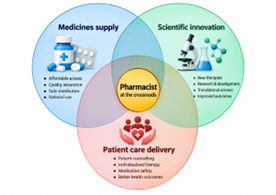
Figure 1: The pharmacist at the crossroads of medicine supply, scientific innovation, and patient care delivery
Why 'Empowerment' Is the Right Word
The theme was captured well by the President of FIP, Mr. Paul Sinclair, who stated that empowering pharmacists meant giving them the skills, recognition, and working conditions to address the changing health needs: "Pharmacists are ideally placed at the crossroads of medicines supply, scientific innovation, and the delivery of patient care. This is what a pharmacist is good for and what a pharmacist is easy to forget. A pharmacist is not a mere dispenser of drugs! Their role is that of trained scientists, patient educators, and, in many ways, the most available source of clinical judgment within a community. However, only if there are three factors in place does this potential become improved health outcomes:
Compensation: the payment of wages that reflects the role of pharmacists as health care providers, rather than simply suppliers of medications
Scope of practice: empowering pharmacists to practice at the level of their training (chronically ill patients, minor ailments, vaccinations)
Funding: not assuming that medication is an afterthought in funding systems, and staffing and digital infrastructure are adequate. The evidence is strongest when these three align. Community pharmacies are among the most frequented health care touchpoints worldwide: in some countries, the number of visits to a community pharmacist is as high as 10 times that to a family physician. With the right support, that level of reach can be a public health asset that most systems are not fully leveraging. This is a diary of experiences from the front lines in Pakistan.
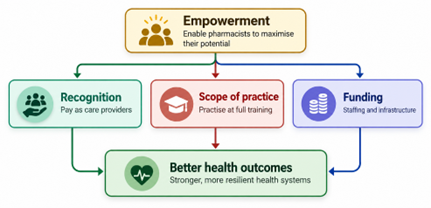
Figure 2: The three pillars of pharmacist empowerment
A Perspective from the Front Lines, Pakistan
As a licensed pharmacist trained and registered in Pakistan, I find this theme very personal, as I have witnessed it at the pharmacy counter during policy discussions. The pharmacist provides first and sometimes last contact for the patient while the health care system is highly fragmented, poorly resourced, and inequitable, especially between urban and rural areas, in Pakistan. In many communities, a pharmacy acts as a front-line clinic. People may come in for advice about managing their chronic conditions, about making sure that their prescriptions are safe to take, about how the medicines they take may interact with each other, or about the care that is most basic and appropriate, not because they think it is their best choice, but because it happens to be the only way to get to a doctor, or because they can't afford to go.
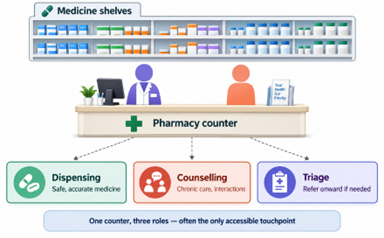
Figure 3: The community pharmacy counter as a frontline clinic
During the COVID-19 pandemic, this role was an insurmountable challenge to ignore. Throughout the country, community pharmacists in Pakistan stepped directly into the breach when hospitals were inundated with patients and doctors were unable to attend to them.
They discussed with the patient and their relatives the clinical symptoms of anxiety and offered support and guidance to alleviate those symptoms.
Advised patients who were experiencing anxiety-related symptoms when OPDs were closed or overcrowded. Controlled patients' expectations and directed access to medicine in a country-wide scenario of scarcity.
Promoted vaccination programs in the community. Continued to be the only safe, reliable health care touchpoint for entire neighborhoods during lockdown. No job description called for this; it arose from a need, and pharmacists were in a position to fill it. This wasn't a policy discussion but a practical example of how pharmacists can be integral to a health system's resilience as a direct part of communities' survival during a crisis. The gap between informal role and formal recognition.
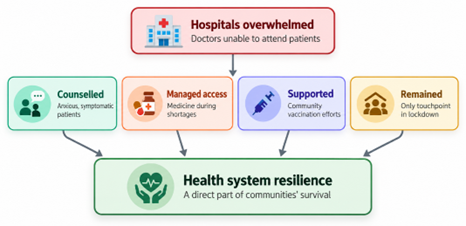
Figure 4: The pharmacist's expanded role during COVID-19 in Pakistan
The Gap Between Informal Role and Formal Recognition
The bad news is that in countries such as Pakistan, clinical services such as this have been unregulated, unsupported, and unsafe for years and years, conducted informally by pharmacists without any scope of practice, funding, or recognition. This is exactly the space that FIP is urging governments, regulators, and health insurers to close worldwide: Invest in the education and training of pharmacists to ensure the workforce continues to meet changing health needs. Incorporate pharmacists into national health strategies formally, not only in a dispensing role. Increase the scope of practice, as it allows pharmacists to safely and legally provide the services they are already trained to provide and that patients often already expect. Provide and support pharmacy services adequately; acknowledge that clinical counseling and dispensing are both clinical services, not simply retail transactions; and recognize that this is not an issue of optimisation, but a matter of timely, safe care, or no care at all, in a country like Pakistan. A school for the 21st century. The school of the 21st century.
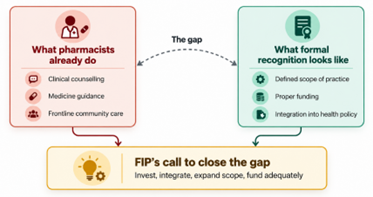
Figure 5: The gap between pharmacists' informal role and formal recognition
Empowering pharmacists for healthier futures:
Ultimately, “Empowering pharmacists for healthier futures” is a call to action, which is directed towards three audiences:
Pharmacy educators and policymakers to incorporate a greater emphasis on quality through a focus on patient safety, student learning and retention, and staff wellness practices into pharmacy education and practice.
Policymakers and regulators, to formally extend the scope of practice for pharmacists.
Health systems and institutions, to involve pharmacists as equal stakeholders in delivering healthcare services and not as a part of the supply chain.
The profession itself, to continue to be digitally health literate, to be ready to tackle chronic disease, to be ready to respond to public health challenges, so they can keep evolving as the next health crisis emerges.
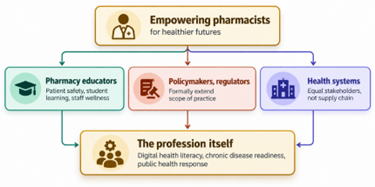
Figure 6: The call to action, directed at four audiences
Today, on World Pharmacists Day, the focus is not only on what pharmacists have accomplished but also on celebrating them. It's about asking what more can be achieved when their hands are truly on the wheel, whether in a hospital in Lahore, at a community pharmacy counter in Karachi, in a research lab, or in a classroom educating the next generation of doctors of pharmacy about what the profession can be.

Suggested Reading
AntiMicrobial Resistance In Pakistan: Why It Matters and How We Can Stop the Silent Pandemic
Explore why antimicrobial resistance is rising in Pakistan, its human and economic toll,and what
Dengue Fever in Pakistan: Prevention, Early Warning Signs, and Effective Protection
Learn how dengue fever spreads in Pakistan, its early and severe warning signs, and proven ways to prevent mosquito-borne infection at home.