Mental Health Matters: Recognizing Stress, Anxiety, and Depression Before They Escalate
Learn the early signs of stress, anxiety, and depression; how they differ; and why seeking support early matters. For education, not diagnosis.

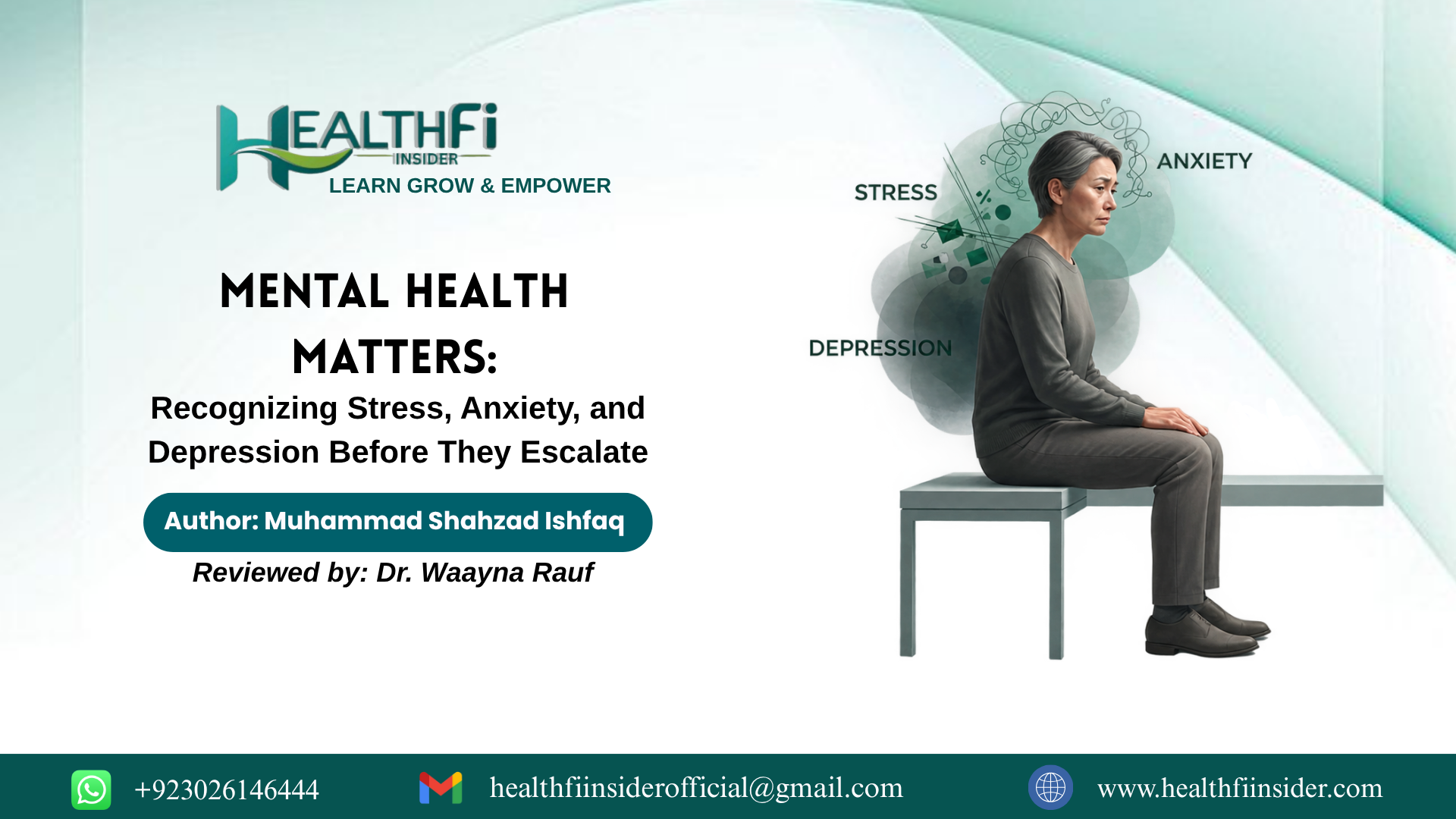
Mental Health Matters: Recognizing Stress, Anxiety, and Depression Before They Escalate
Mental health is as important as physical health, yet it gets less attention until the problem becomes severe. In today’s fast-paced world, stress, anxiety, and depression are among the most concerning mental health problems globally. According to the World Health Organization (WHO), anxiety affects over 350 million people, and depression affects more than 330 million people, while according to the Gallup Global Emotional Report, almost 190 million people suffer from stress on a daily basis. These issues, while untreated, can lead to burnout, substance abuse, or suicide attempts. Recognizing early signs can play an important role in prevention and management.
How Stress, Anxiety and Depression Differ
Stress:
It is a physical and emotional response to challenging situations, such as work, school, or a difficult relationship.
Time horizon: It is responsive and can become acute or chronic depending on the situation.
Early signs: headache, stomach upset, trouble sleeping, loss of appetite, difficulty concentrating.
Anxiety:
It is a feeling of unease, worry, or fear that can be mild to severe. A sustained perception of threat or bad outcomes that are less likely to become true.
Time horizon: It is chronic.
Early signs: feeling unease, cold and sweaty hands, increased heart rate, Dry mouth, Unable to concentrate.
Depression:
It is a mood disorder that affects your feelings, thoughts, and behavior. It can cause feelings of sadness, hopelessness, and loss of interest in activities you used to enjoy.
Time horizon: It is episodic in most cases—episodes lasting weeks to months. A small fraction is chronic.
Early signs: Poor concentration, feeling guilt, Hopelessness about the future, Suicidal thoughts, and disrupted sleep. (Helpstartshere).
Why early recognition matters
Approximately one in six persons will experience depression at some point in their lives. Depression can strike anyone, at any age, and in any kind of person. Many individuals who suffer from depression also have other mental health issues. Depression and anxiety problems frequently coexist. Anxiety disorders are characterized by strong, uncontrollable sensations of fear, worry, panic, and/or anxiety. These emotions may persist for a long period and interfere with day-to-day activity. (CDC, 2023)
Anxiety and depression are treatable, but they often remain hidden until too late. By noticing the early signs, families, teachers, and community leaders can step in before the burden grows heavier. Just as we respond quickly to fever or cough, we must also act when mental health symptoms appear.
Prevents escalation: Spotting symptoms early helps prevent episodes.
Improves treatment outcomes: Starting therapy or making lifestyle changes early works better.
Protects health: Long-term stress and depression can lead to heart disease, diabetes, and a weaker immune system.
Supports relationships and productivity: Acting early keeps people functioning well in social and work settings.
Strategies for Intervention
A mental health intervention involves a gathering of family and friends with the common goal of discussing treatment options for an individual’s mental illness or trauma. These are structured techniques used to address both the immediate and long-term management of mental health conditions.
Therapeutic interventions:
Include evidence-based practices like cognitive-behavioral therapy, psychotherapy, and group therapy. These practices are designed to address psychological distress through structured sessions with a mental health professional. These interventions include:
Cognitive-behavioral therapy.
Psychotherapy.
Group therapy.
Mindfulness-based interventions.
Medication interventions:
Medication interventions involve the use of pharmaceuticals to manage symptoms of mental health disorders under the guidance of healthcare providers.Medications commonly used in mental health include:
Antidepressants.
Antipsychotics.
Mood stabilizers.
Anxiolytics.
Lifestyle changes:
Lifestyle changes can also serve as an intervention. These usually emphasize the role of diet, exercise, and mindfulness in maintaining mental well-being.Key lifestyle interventions include:
Physical activity.
Mindfulness.
Dietary modifications.
Sleep hygiene (Wandler, 2025).
How to improve mental health
There are many ways to take care of your mental health, including:
Staying positive, which is the habit of seeing the good in situations and expecting things to work out well. Some ways to build a positive outlook include:
Finding balance between positive and negative emotions.
Trying to hold on to good feelings when you have them.
Limiting exposure to negative information.
Practicing gratitude, which means being thankful for the good things in your life. It's helpful to do this every day, either by thinking about what you are grateful for or writing it down in a journal.
Taking care of your physical health, since your physical and mental health are connected.
Being physically active.
Getting enough sleep.
Healthy eating.
Connecting with others, since strong, healthy relationships may help protect you against stress. It is also good to have different types of connections. Besides connecting with family and friends, you could also get involved in your community or neighborhood.
Developing a sense of meaning and purpose in life, whether through your job, volunteering, learning new skills, or exploring your spirituality. Having a sense of purpose supports long-term emotional health.
Developing coping skills, which are methods you use to deal with stressful situations. They may help you be flexible, face difficult problems, and not give up easily until you solve them.
Meditation is a mind-body practice where you learn to focus your attention and awareness. (MedlinePlus, 2025).
Barriers to help-seeking in mental health problems
There are several barriers that prevent people from seeking help, which lead to escalation of mental health problems.
Hope that the issue will sort itself out: Denial and avoidance are the most difficult barriers to overcome for a prompt response.
Embarrassment or shame: Stigma continues to be one of the most significant reasons why people refuse professional help.
Belief in solving problems independently: People would rather rely on themselves than seek external assistance.
Worries about affecting future career opportunities: Career-based stigma plays an important role in decision-making.
Worries about the matter becoming public knowledge: The fear of being exposed prevents people from seeking assistance.
Financial costs involved: Economic factors play an important role in access to help.
Discomfort with discussing emotions/feelings: Emotional factors play a significant role in the communication process.
Consequences of Untreated Mental Illness
Untreated mental illness leads to various problems. These include:
Social problems with friends and family
Suicidal thoughts
Financial problems
Discontinuation from university or work
Reduction in academic performance
Outcomes of seeking help
Reaching out for assistance with one's mental health is associated with noticeable benefits across several aspects of life. According to research, people who seek help are characterized by:
Better health overall: people benefit from both mental and physical improvements through treatment and support.
Improved confidence and self-respect: as people overcome the stigma and receive proper support and counseling, their self-respect and self-confidence grow.
Improved relationships with others: better communication and emotional stability help people develop stronger connections with family members, friends, and peers.
Development of better social skills: counseling sessions and support groups provide a person with more resilience and empathy.
Greater academic and professional performance: improved concentration helps a person to perform better in studying or working.
Better physical health: addressing mental health issues positively impacts people’s physical condition. (Mohamed Ibrahim et al., 2020).
Conclusion
However, mental problems such as stress, anxiety, and depression affect millions of people around the world. Yet, in many cases, they remain unnoticed until significant damage happens. This study highlights the importance of detecting mental health issues on time and addressing them before any consequences happen. By removing stigma, asking for help, and developing proper coping mechanisms, people will be able to safeguard their own mental health and develop strong personal relationships, study, and work successfully.
References
CDC. (2023). Mental Health Conditions: Depression and Anxiety. https://www.cdc.gov/tobacco/campaign/tips/diseases/depression-anxiety.html
Helpstartshere. https://helpstartshere.gov.bc.ca/
Medlineplus. (2025). How to Improve Mental Health. https://medlineplus.gov/howtoimprovementalhealth.html
Mohamed Ibrahim, O. H., Ibrahim, R. M., Al-Tameemi, N. K., & Riley, K. (2020). Challenges associated with mental health management: Barriers and consequences. Saudi Pharm J, 28(8), 971-976. https://doi.org/10.1016/j.jsps.2020.06.018
Wandler, D. K. (2025). Mental Health Intervention: Strategies and Effectiveness. https://www.floridarehab.com/resources/intervention/mental-health/


Comments & Discussion
0 CommentsJoin the conversation. Please keep the discussion respectful and educational.
Leave a Comment
Your thoughts are valuable to our community.
Suggested Reading
AntiMicrobial Resistance In Pakistan: Why It Matters and How We Can Stop the Silent Pandemic
Explore why antimicrobial resistance is rising in Pakistan, its human and economic toll,and what

World Pharmacists Day 2026: Strengthening Pharmacists to Make Healthier Futures
World Pharmacists Day 2026 explores FIP's theme of empowering pharmacists, with a firsthand look at their expanding clinical role in Pakistan.
Be the first to share a thoughtful comment on this article.